
This article provides professional guidance. Suitability, execution and legal requirements must always be assessed for the individual property.
Natural stone is part of the guest journey
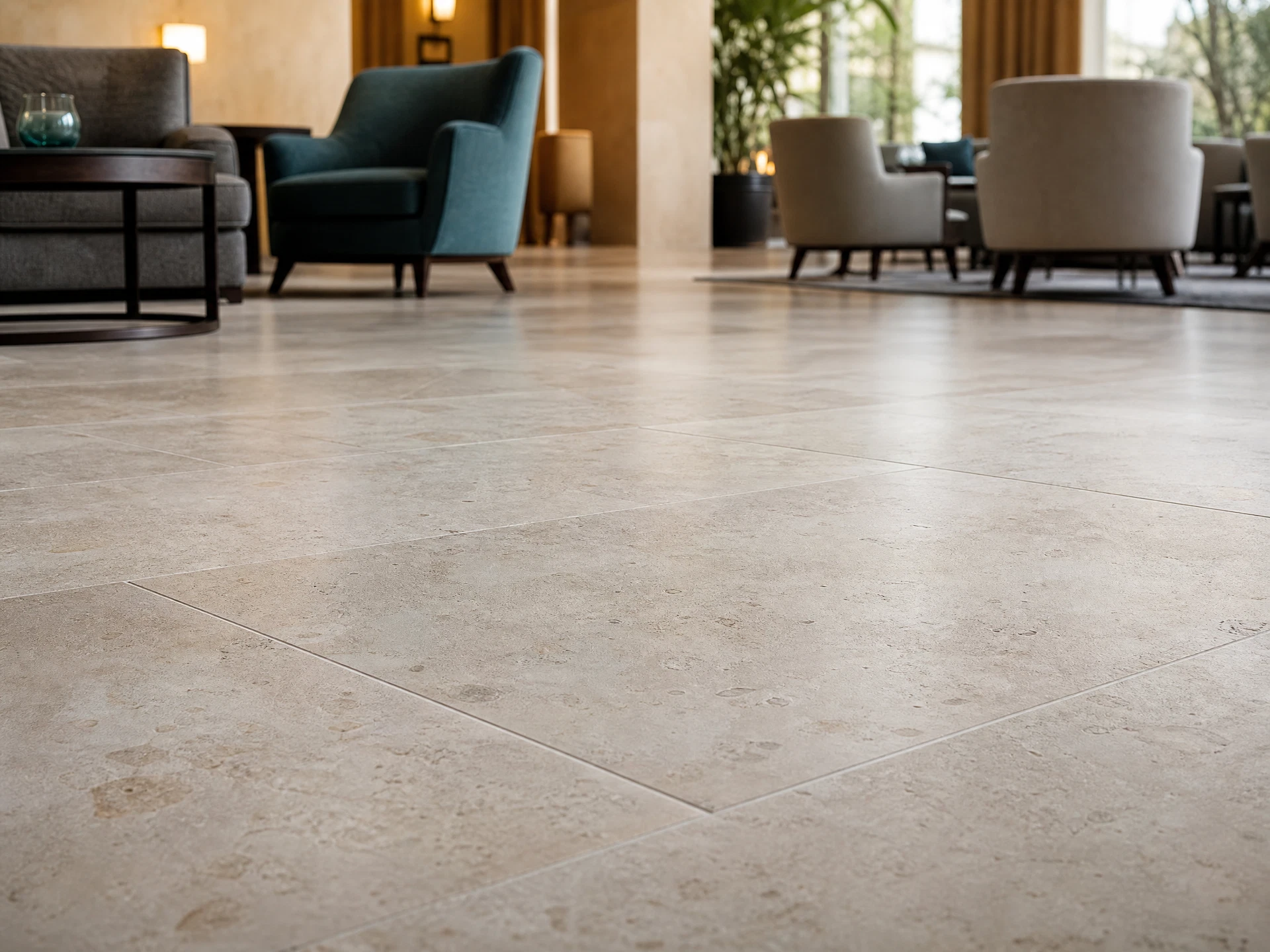
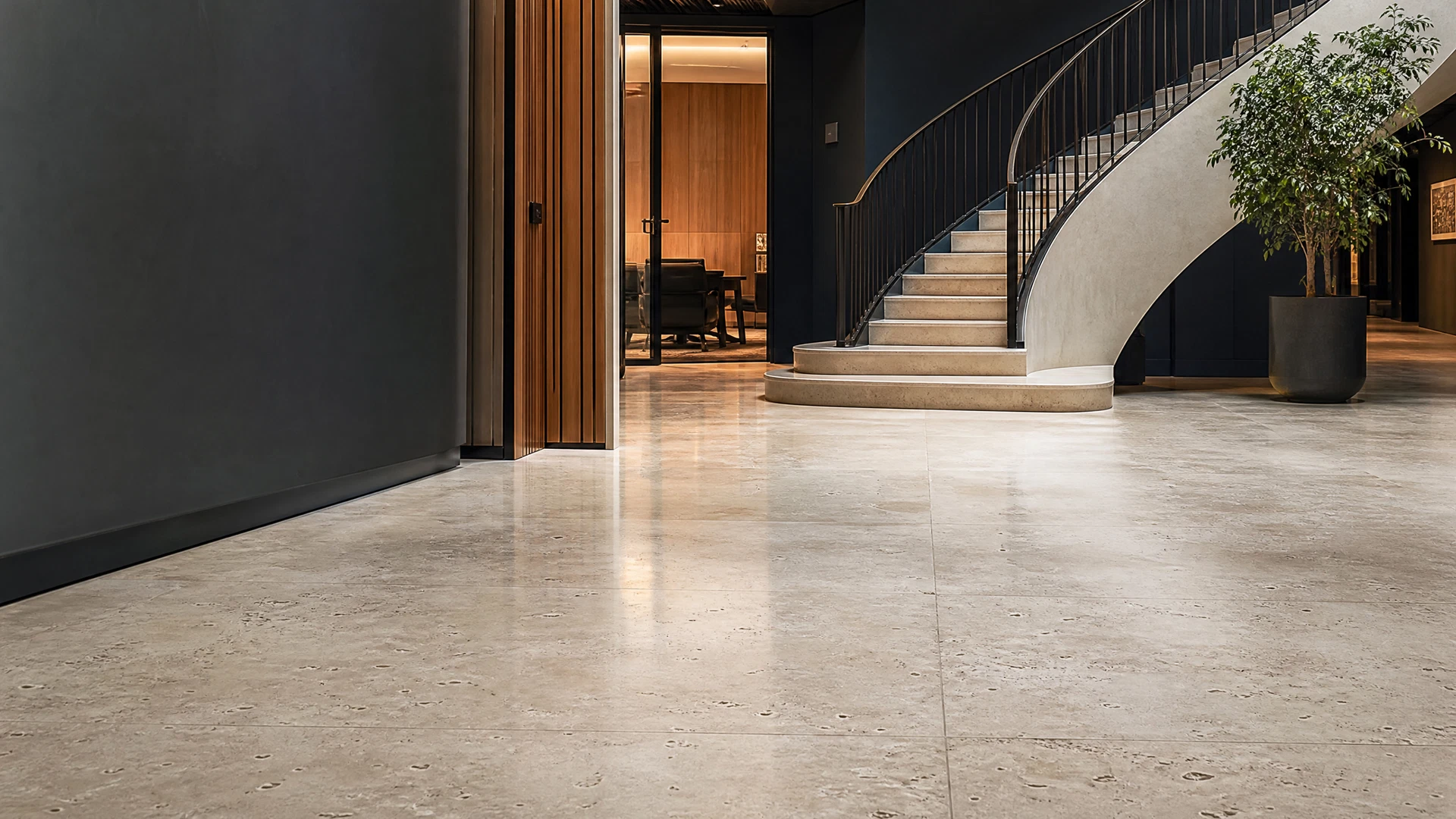
In a hotel, natural stone rarely remains a background surface. It frames arrival, directs guests through circulation areas and is visible in places where the first impression is formed. That makes care a practical part of the property's quality routine, not simply a final cleaning step.
The correct approach depends on the particular stone, surface finish and use. A polished marble lobby, a honed limestone corridor and a textured entrance zone can require very different routines even within the same property.
Read traffic zones before choosing a routine
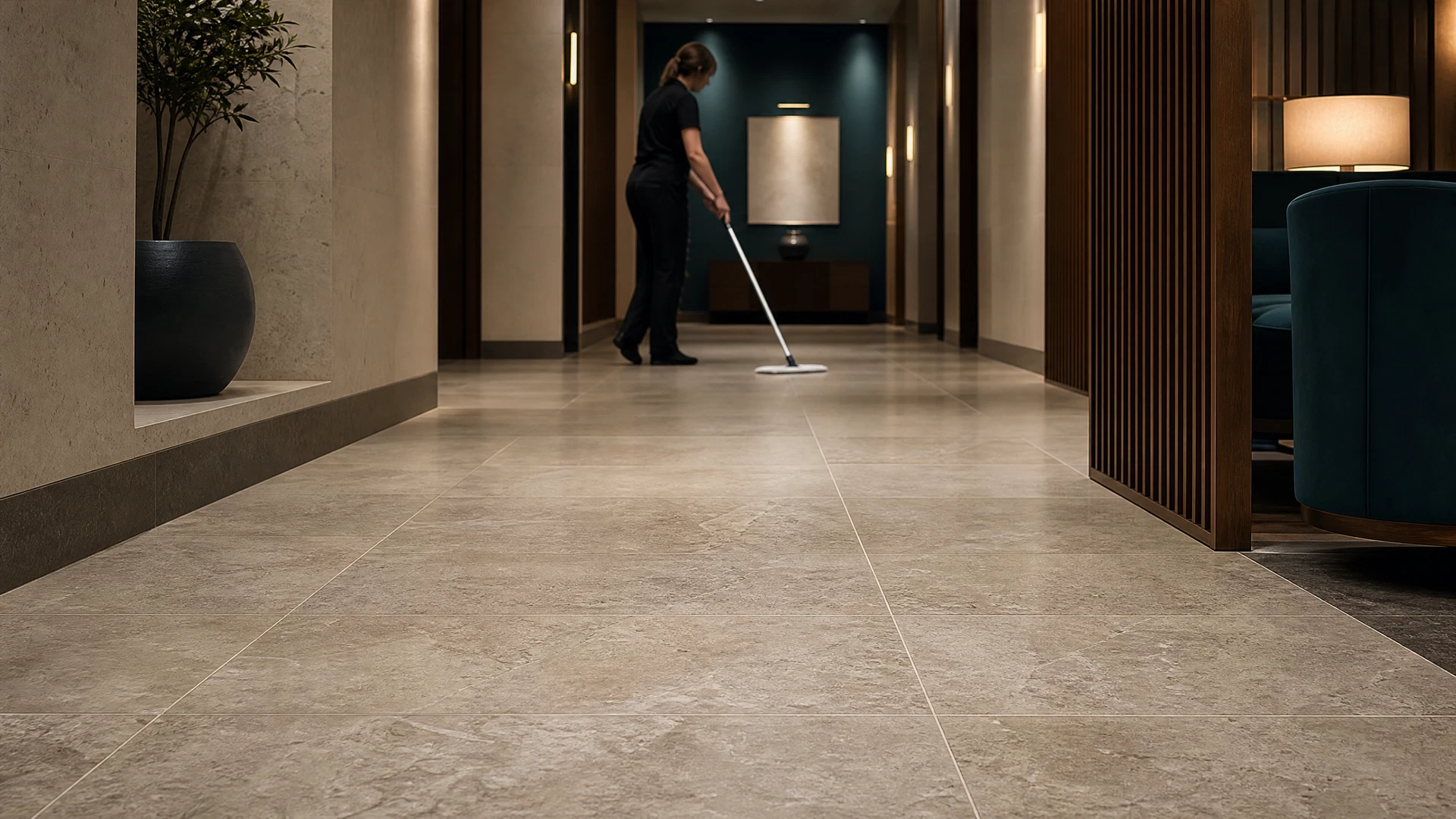
Entrance areas face grit and moisture, breakfast and service zones face different spill risks, while guest corridors are shaped by rolling luggage and recurring foot traffic. One routine for every area rarely reflects these differences.
A simple zone plan helps teams observe where dull tracks, abrasion or residual moisture actually occur. It also makes it easier to coordinate matting, cleaning timing and service access with the hotel's operating hours.
Protection at the entrance begins before cleaning
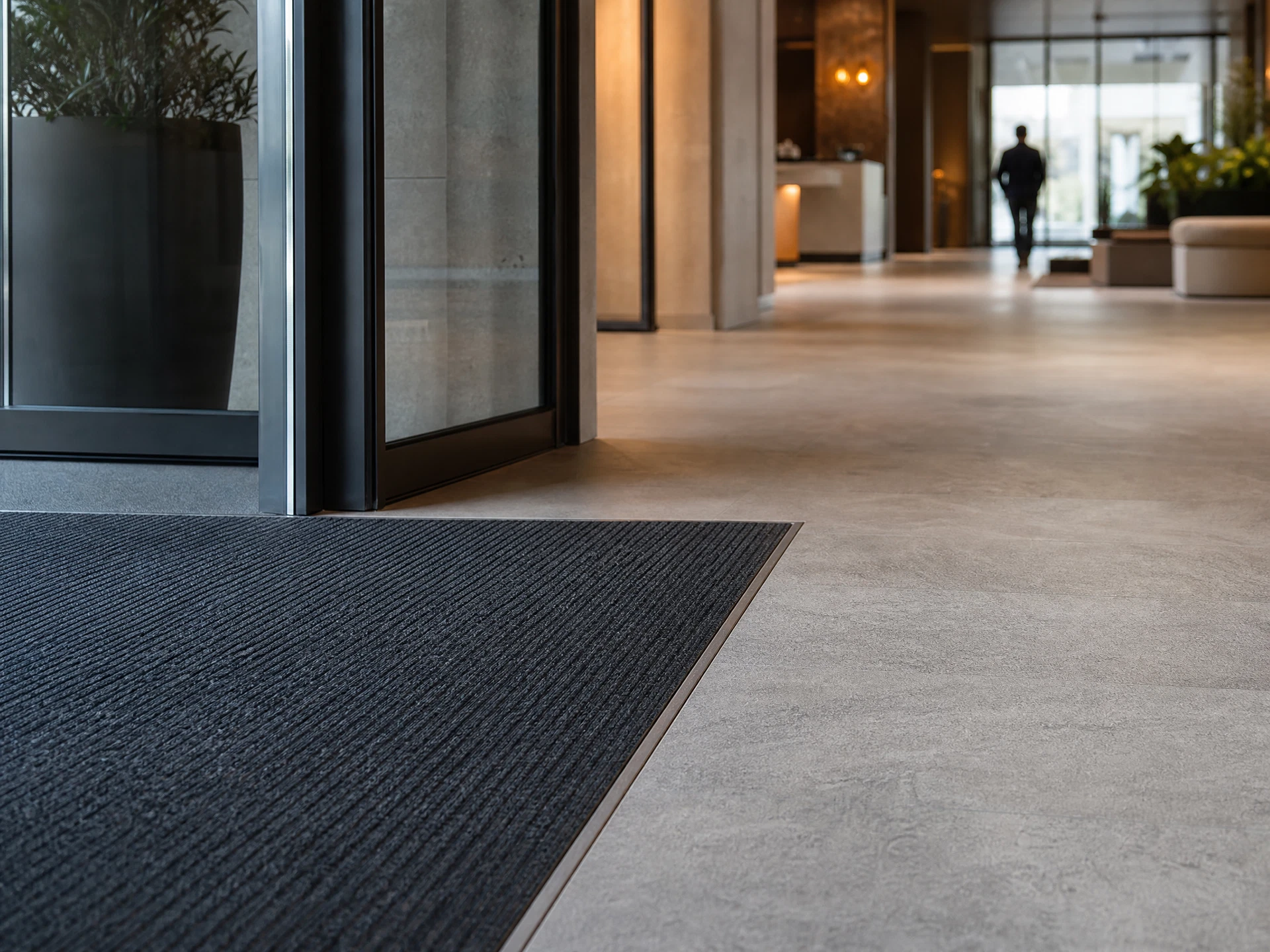
Well-positioned entrance matting, clear transitions and appropriately timed dry cleaning can reduce the abrasive load that reaches a stone surface. These measures do not replace care; they help prevent avoidable grit from being distributed through the building.
The material transition is worth documenting in the care concept. If a mat is saturated, wrongly sized or bypassed by the usual guest flow, a suitable cleaning product alone cannot compensate for the increased stress on the floor.
Mild products and clear handovers
The Natural Stone Institute recommends mild or neutral cleaners for natural stone; acidic products can damage calcareous stones in particular. [1] Equally important are suitable tools, correct dosage and sufficiently frequent changes of rinse water.
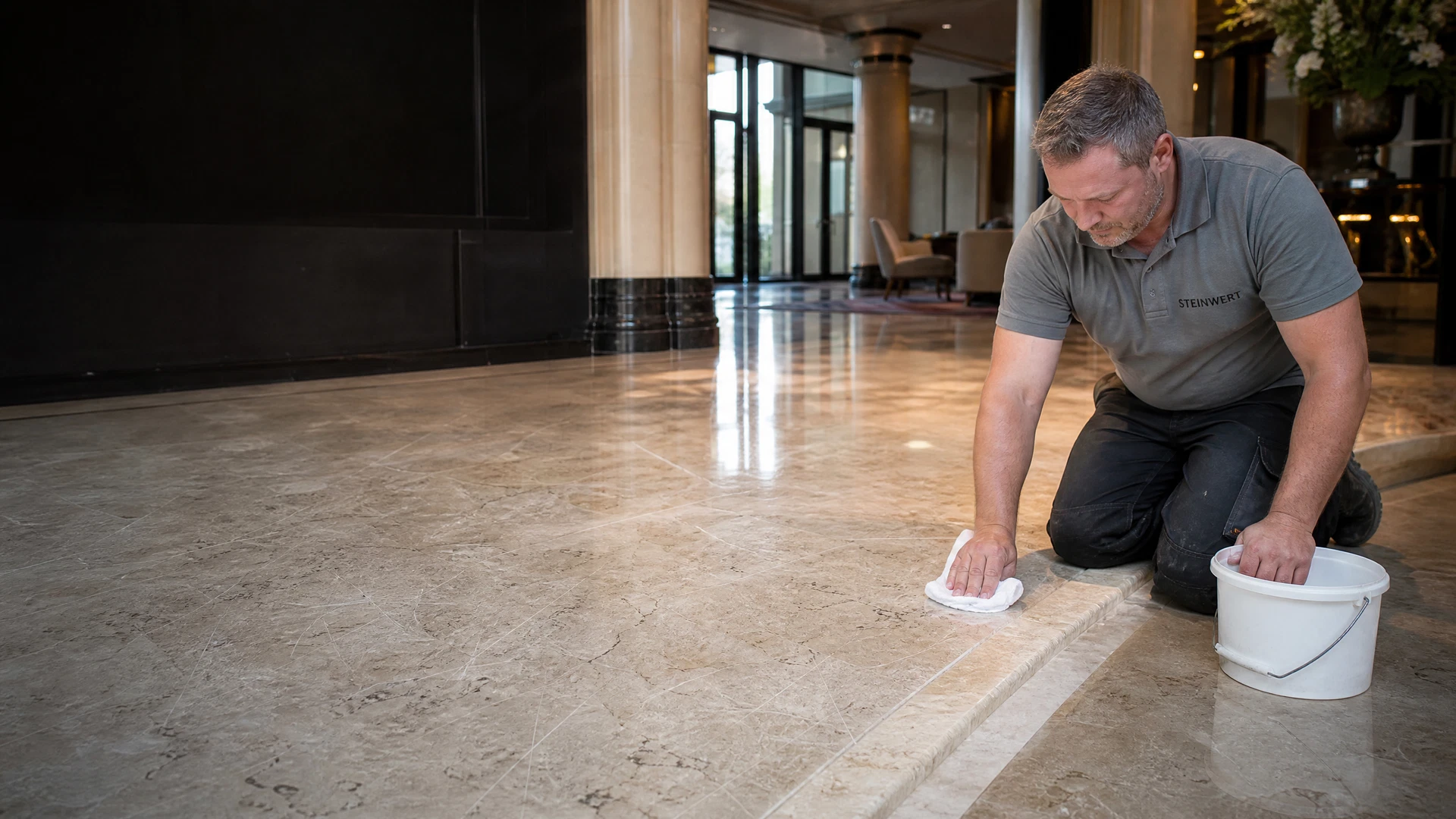
For hotel teams, a workable routine means recording product and dosage, selecting mop covers for the surface and treating spills without spreading them further. Defined handovers make observations from one shift usable for the next.
Sealers support a process; they are not a guarantee
A penetrating sealer can slow the absorption of certain liquids. It is not a stain-proof guarantee and does not automatically prevent abrasion or acid-related changes. [1] A sealed surface therefore still needs an appropriate cleaning process.
Whether a renewal is sensible follows from the material, usage and observed surface condition. A professional assessment of the actual area is more reliable than a fixed calendar interval.
When routine care reaches its limit
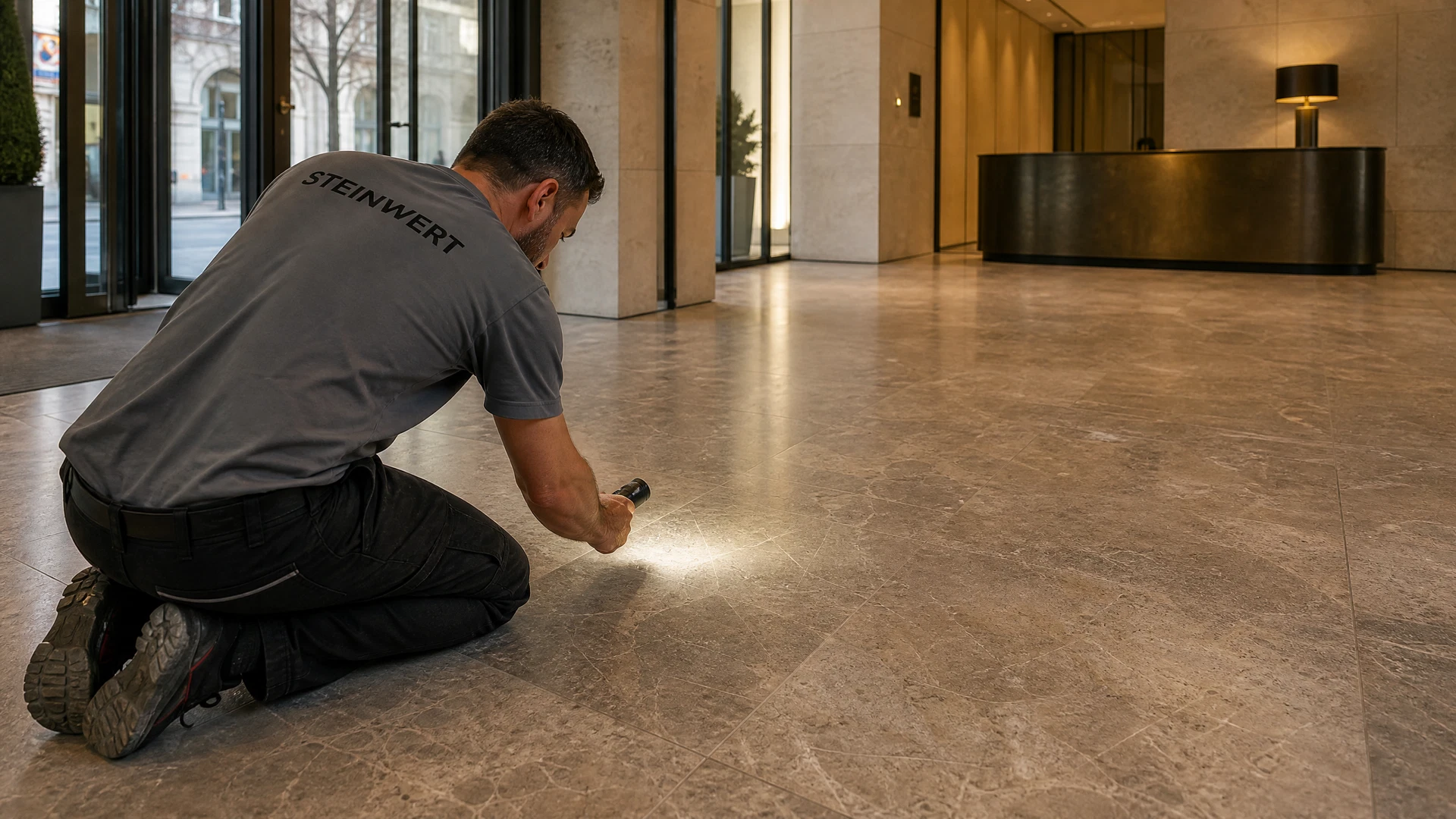
Dull traffic lanes, deeper scratches, persistent marks or an uneven finish are signals to examine the surface more closely. Early assessment can make a selective or area-based measure easier to schedule around hotel operations.
Useful documentation records the zone, observation, existing routine and timing. This gives a specialist a clear basis for assessing whether routine care, deeper cleaning, honing or repair should be considered for the individual property.
In hotel operations
Keep natural stone surfaces in view.
What to check on site
The decision starts on site.
- Identify stone type, finish and acid-sensitive zones
- Map entrance matting, guest routes and service routes
- Record cleaning product, dosage, tools and shift handovers
- Review dull lanes, scratches, moisture and persistent marks by zone
Frequently asked questions
Clear answers for the next step.
How often should hotel natural stone be professionally reviewed?
There is no universal interval. Use, soil entry, stone type, finish and routine cleaning determine when a professional review is useful.
Which cleaning products suit natural stone in a hotel?
The choice depends on the material and supplier guidance. Acidic products can be critical for calcareous stone, so suitable mild products and controlled dosing matter.
When is routine care no longer enough?
Persistent dull traffic lanes, scratches, etching, problematic care films or deeper stains should trigger a condition review before a treatment is selected.
SteinWert consultation
Would you like to organise care for hotel natural stone surfaces in a material-aware way? We work with you on a property-specific process.
Sources and notes
[1] Natural Stone Institute: Care & Cleaning of Natural Stone