
This article provides professional guidance. Suitability, execution and legal requirements must always be assessed for the individual property.
A worn floor is an observation, not yet a decision
Faded lines, dull traffic zones or isolated damage describe what is visible. Before a measure is selected, the existing surface, adhesion, construction, moisture indications, joints and current use need to be assessed together.
This matters because indoor sports floors are systems. Surface, elastic layer and substructure serve protective and sporting functions together. [5] A renewed appearance alone does not show whether the existing build-up remains suitable.
Renewing court lines means planning the system
Court lines are not merely decoration. In a multi-use hall, sports, operators and, where relevant, associations need to agree on a clear line plan, colours and priorities. [6]
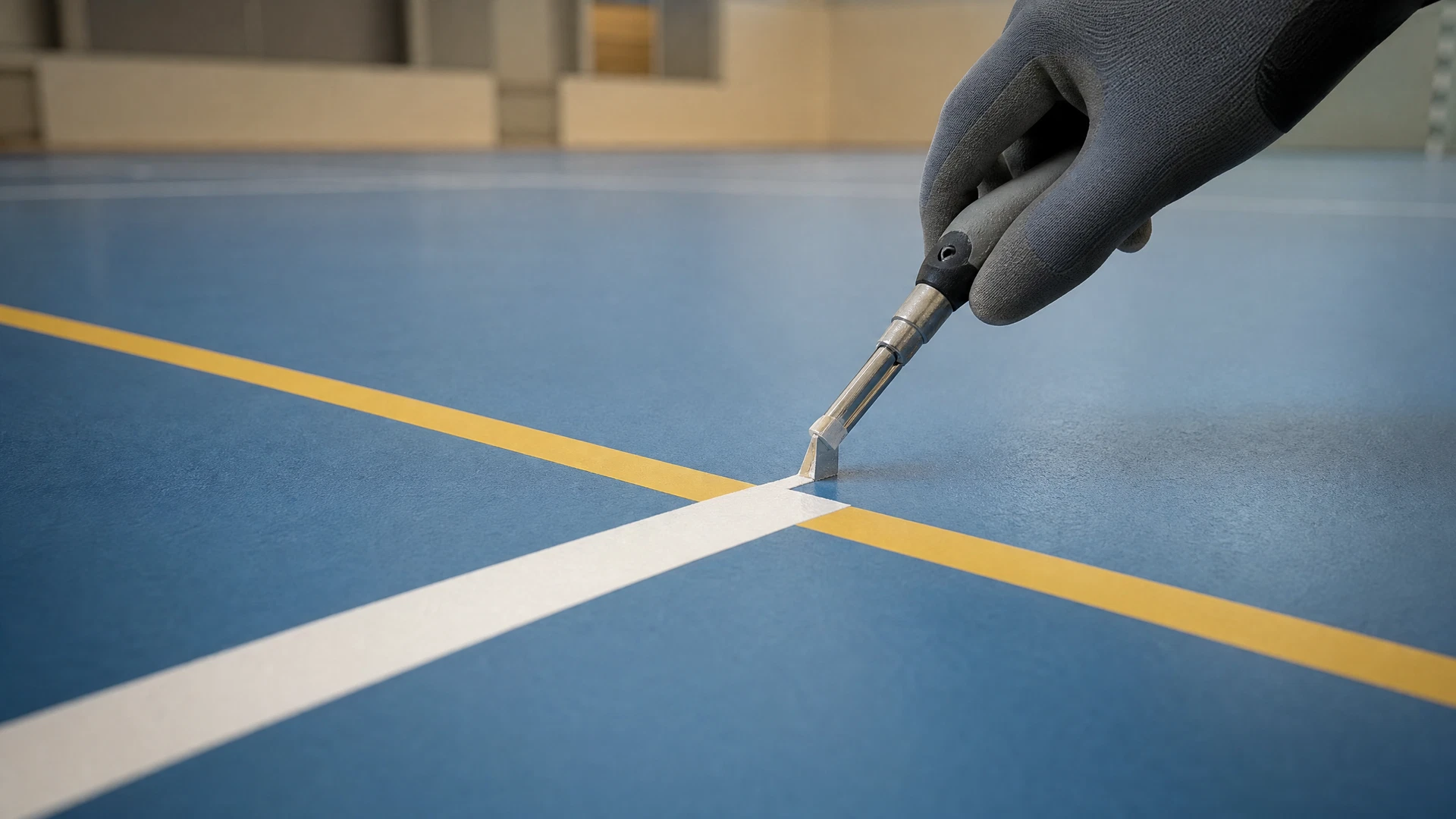
If a PU renewal is technically appropriate, preparation, adhesion, line application and protective finish belong together. Manufacturer guidance describes renewed lines as part of a renovation build-up; the approved system documentation remains decisive for the actual property. [1]
PU renewal or a new sports floor?
A renewal can be a route when the existing structure is sound enough and the confirmed system is suitable for the required use. It can preserve the floor's basic construction while refreshing surface appearance and court lines. [1] [2]
A new floor is not a failure of refurbishment. It can be the appropriate planning route when damage reaches deeper layers, the substructure no longer performs as required or the intended future use changes the technical brief. The comparison below structures the questions rather than deciding for a specific property.
Decision guide
PU renewal and floor replacement: questions before choosing a route
This table structures typical criteria. It does not replace a condition assessment, system approval or sports-functional assessment at the specific property.
Swipe sideways in the table to see the full comparison.
| Criterion | PU renewal with renewed court lines | New sports floor |
|---|---|---|
| Starting point | Existing surface, adhesion, damage and substructure are assessed first. | The existing build-up is replaced or fundamentally redesigned. |
| Court lines | Line plan, colour system, adhesion and protective layer are coordinated as part of the approved build-up. | Line markings are planned with the new system and intended use. |
| When to consider it | When the existing surface and its build-up are suitable for renewal after professional assessment. | When the substructure, damage, use or required properties do not reliably support renewal. |
| Sports function | Assess for the existing property and approved system; a surface alone does not prove compliance. | Define through the build-up, usage profile and required evidence for the project. |
| Resources | May avoid removal, transport and disposal when the existing floor is suitable. [1] | May be the appropriate long-term route where the existing structure is no longer viable. |
Guidance, not a performance or cost promise: the decision needs a condition assessment, use concept, line plan, system data and, where appropriate, independent testing.
Sports function requires evidence, not labels
Slip behaviour, force reduction, ball rebound, rolling loads, fire behaviour and other properties cannot be inferred from the word PU or from a fresh line marking. Relevant requirements depend on the system, the intended use and evidence for the particular build-up. [5] [6]
For that reason, project documents should bring together the existing-condition assessment, product and system data, care concept, line plan and any necessary independent testing. This also makes later decisions easier to trace.
A clear sequence before work starts
First document the existing floor and its use: school sport, clubs, events, rolling loads, cleaning routine and planned court lines. Then clarify whether the existing build-up is suitable for a defined renovation system or whether a new construction needs to be planned.
A sample area and a documented approval route reduce surprises. They connect the intended finish, line colours and practical care with the requirements that the hall actually has to meet.
What to check on site
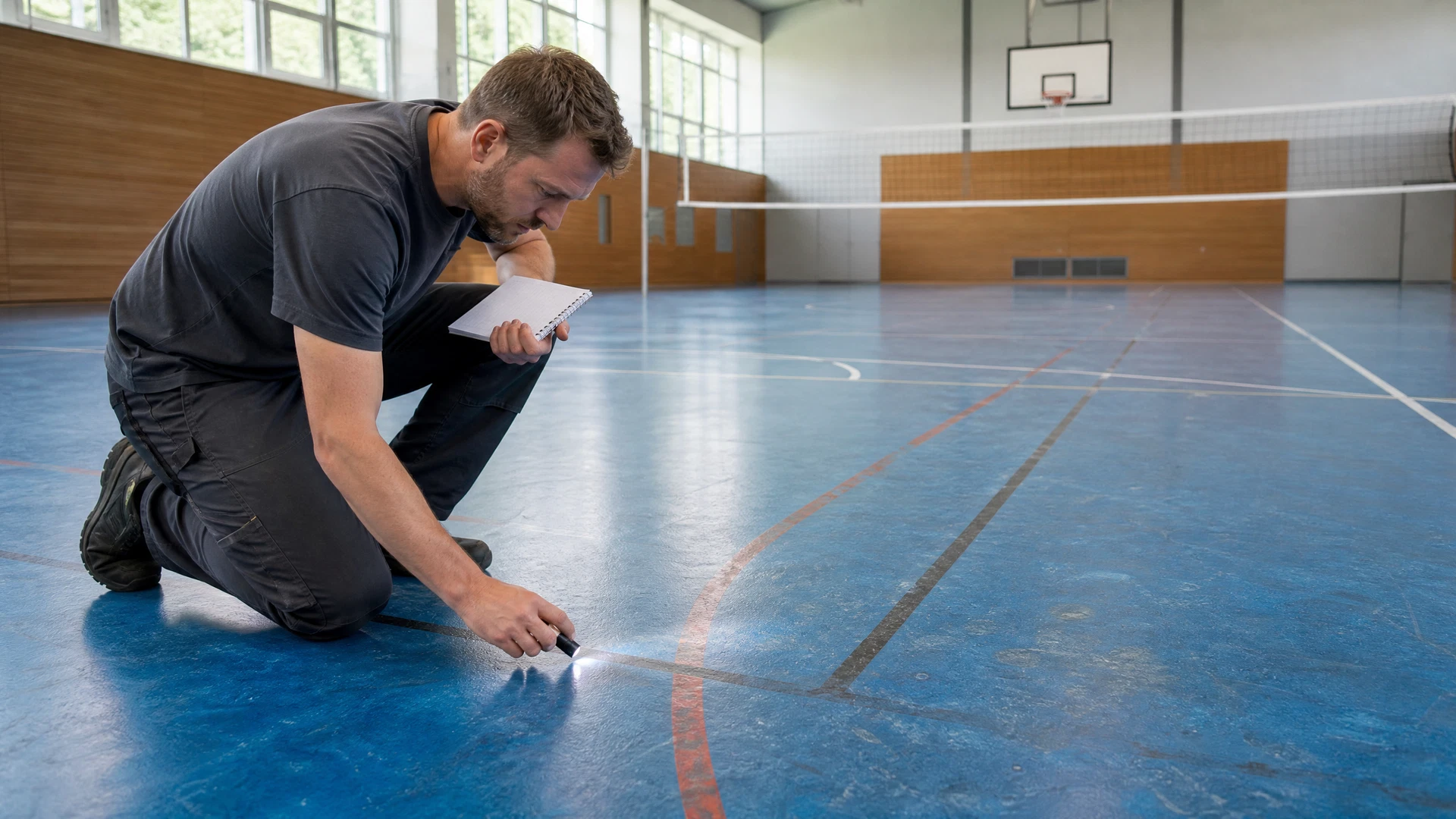
The decision starts on site.
- Record the existing floor, adhesion, joints, damage and any moisture indications
- Clarify sports, events, rolling loads, cleaning process and future use
- Coordinate line plan, colours and priorities with operator and users
- Check approved system data, care concept and required evidence before approval
- Define a sample area and documented release process
Frequently asked questions
Clear answers for the next step.
Can every sports floor receive PU renewal and new court lines?
No. Floor type, adhesion, damage, substructure, moisture indications, use and approval of the proposed system need to be assessed first.
When is a new floor more likely to be appropriate?
Where the existing build-up, deeper damage or required future sports function cannot reliably be reconciled with renewal, a new build-up should be professionally assessed and planned.
Are new court lines only a visual measure?
No. The line plan, colours, visibility, adhesion and protection belong to the system and use planning of the particular hall.
SteinWert consultation
Would you like to assess whether a sports floor can be renewed with PU and new court lines or needs a new build-up? We structure the existing condition, requirements and next technically appropriate step.
Sources and notes
[1] Dr. Schutz: Sportböden renovieren im gewerblichen Bereich
[2] Sportplatzwelt: PUR-Beschichtung
[3] TOP-Sport: PUR-Beschichtung
[4] Held Sportboden: Retopping