
This article provides professional guidance. Suitability, execution and legal requirements must always be assessed for the individual property.
Place the technology in the right context
Fraunhofer ISIT describes an approach in which ozone is generated electrolytically directly from water. Temperature, flow rate and conductivity are relevant process variables; higher temperatures accelerate ozone decay. [1]
This technical context explains why ozonated water should not be treated as a universally storable standard cleaner. Actual use depends on the specific equipment and its controlled operation.
Support, not a universal answer
Ozone can have an oxidising effect and is used for water disinfection in different contexts. [1] This does not justify a blanket claim that every soil type, microorganism or surface can be treated in the same way in professional cleaning.
Heavy or greasy soil, material compatibility and the required hygiene quality remain separate considerations. Mechanical cleaning, suitable equipment and a property-specific hygiene plan do not become less important.
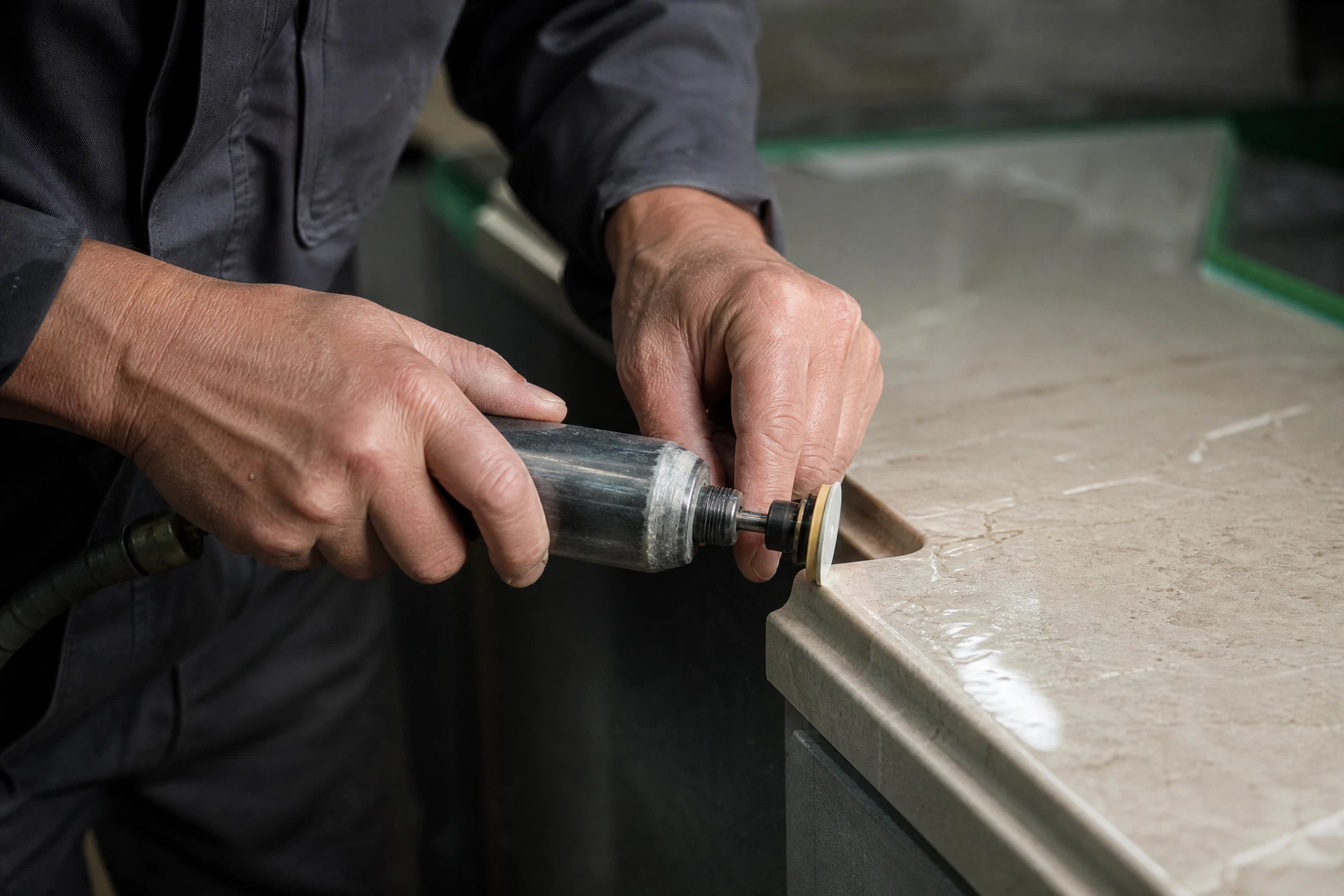
Assess technology and safety together
Water quality, temperature, equipment maintenance, compatibility of surfaces and seals, and team instruction belong on the same checklist before introduction. Where hygiene requirements apply, legal and professional assessment is needed before use.
Phrases such as ‘chemical-free’ or ‘replaces disinfection’ are too simplistic for a responsible assessment. Ozone is an active substance that must be generated in a controlled way; practical value must fit the use case, approved equipment and operational protective measures.
Pilot before making broad promises
A limited test area can help clarify processes in a property. It observes not only cleaning results, but also water parameters, material reactions, equipment stability and the practical workflow for the team.
Only this combination of technology and day-to-day operation creates a decision that is professionally traceable and does not promise more than the specific use can deliver.
Define the property questions before a pilot
Before a process is tested, the surface, type of soil, water quality, equipment manufacturer, existing seals and required hygiene quality should be recorded together. A pilot area is only meaningful when use, observation period and criteria for material reactions, cleaning performance and team workflow are set in advance.
This keeps a technical trial limited to a controllable setting and avoids drawing general conclusions from one isolated observation.
Document results, technology and the team
A test should capture more than visible cleaning results. Equipment availability, water parameters, surface reactions, safe use and the team steps required are also relevant observations.
Only documented evaluation allows an informed decision on whether, and to what extent, a process can be examined further in the specific property.
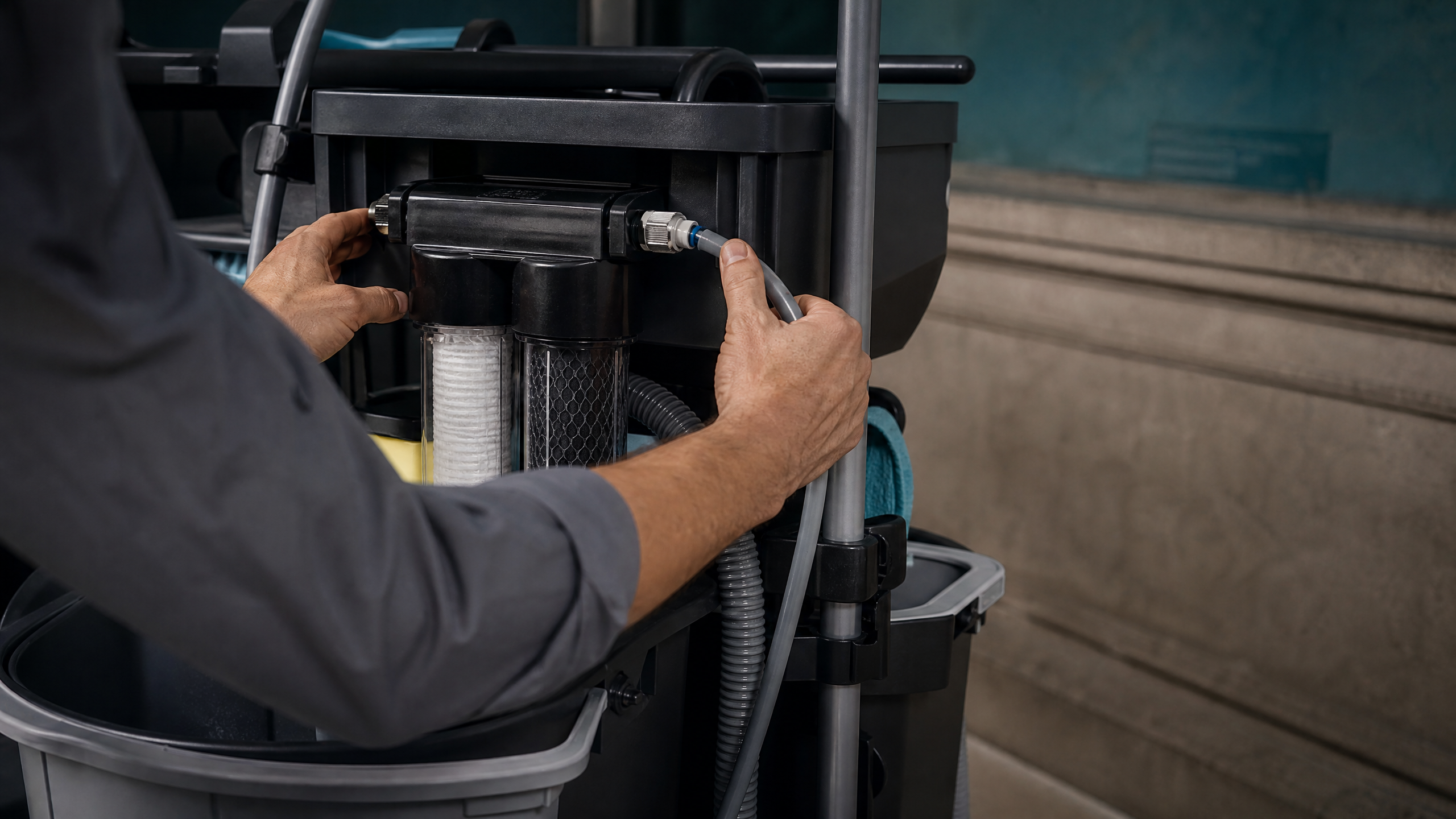
What to check on site
The decision starts on site.
- Align water quality and operating conditions with the equipment manufacturer
- Check surfaces, seals and cleaning equipment for compatibility
- Assess the hygiene plan, occupational safety and, where applicable, biocidal law before use
- Define a test area with clear criteria and documented evaluation
SteinWert consultation