This article provides professional guidance. Suitability, execution and legal requirements must always be assessed for the individual property.
Start by separating the terms
‘Metallic dispersion coating’ commonly describes a design intention rather than one universally standardised floor build-up. Binder base, primer, effect layer, protective finish and final surface can vary greatly from one system to another.
A decorative metallic floor can therefore be a multi-layer system. Remmers, for example, describes a metallic epoxy flow coating with a matt, slip-resistant polyurethane finish for medium loads. [2] A colour sample alone cannot show whether a build-up suits the actual property.
Metallic effect: character is created in layers
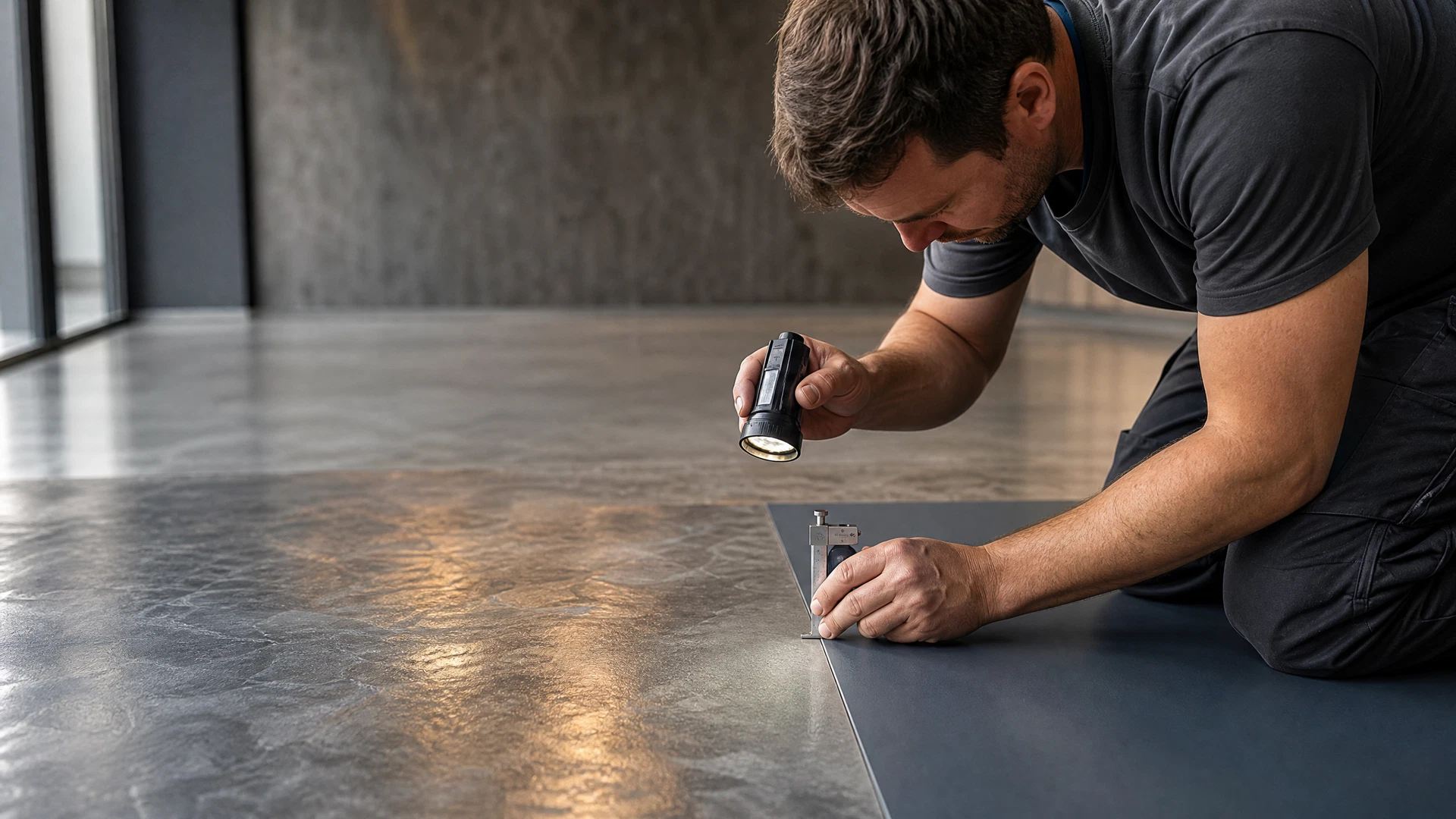
Metallic design surfaces are valued for their depth, movement and individual appearance. This expressive effect also makes a representative sample surface essential: lighting, room proportions and application technique visibly affect the final impression.
Depending on the system, the result is created through a primer, decorative effect layer and protective finish. Substrate preparation, clean working conditions and the specified layer sequence are not secondary details; they are part of both appearance and performance.
PU: coloured renewal and protection
Dr. Schutz offers coloured PU sealing products for floor design and explicitly addresses trained professional applicators. Its product information refers users to the current technical documentation and separate guidance on substrate preparation. [1] [3]
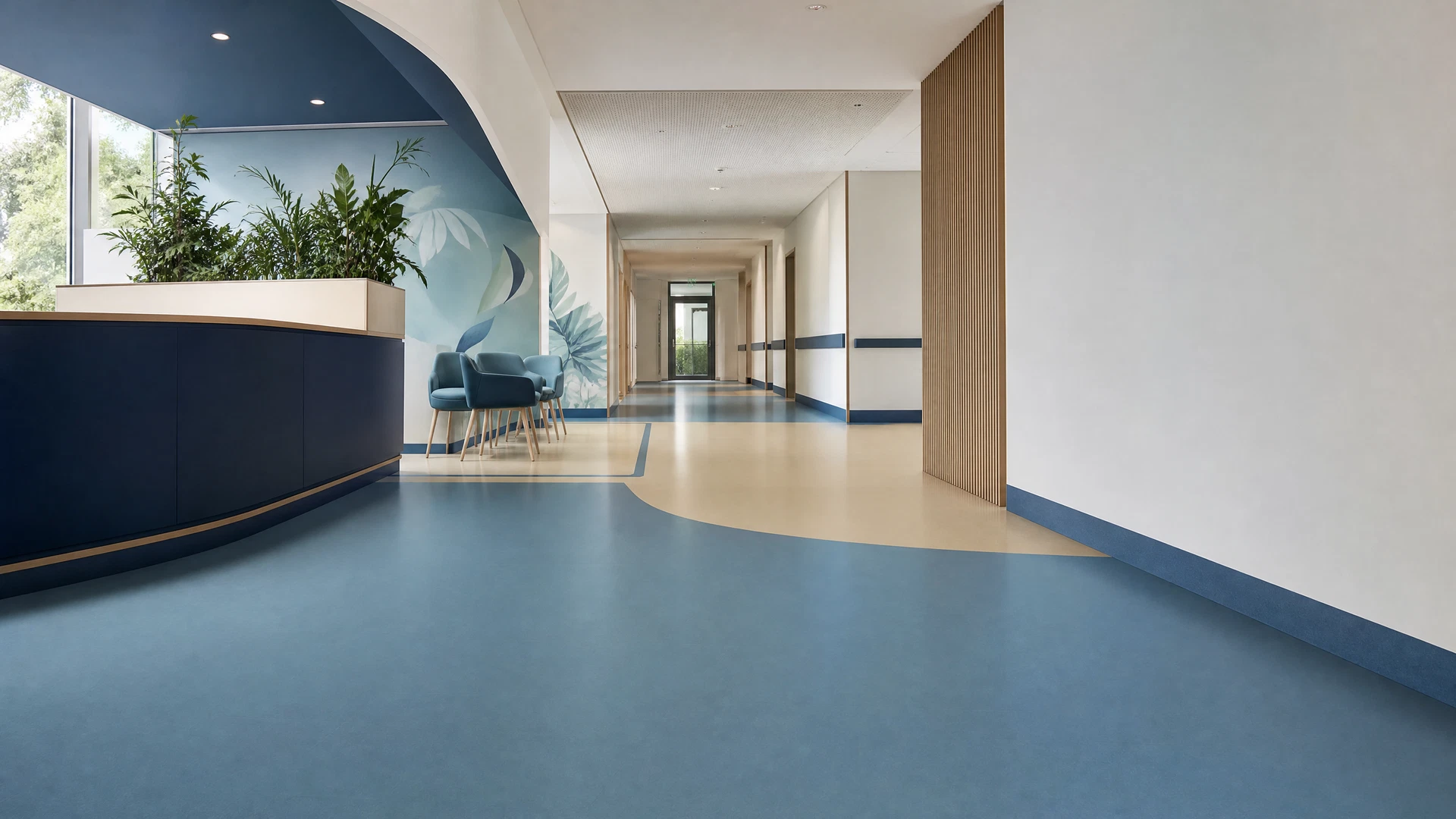
For existing resilient floor coverings, a coloured PU route can be considered after an individual assessment rather than replacing the floor automatically. Floorremaker distinguishes between coloured PU renewal and transparent protective solutions. [4] Which route fits depends on the existing surface and intended use.
At a glance
Metallic dispersion and PU: key distinctions at a glance
This table helps structure typical questions. It does not replace current technical product information or assessment of the individual property.
Swipe sideways in the table to see the full comparison.
| Criterion | Metallic dispersion / effect | Coloured PU coating |
|---|---|---|
| Design objective | Individual, light-sensitive depth and movement in the surface. | A planned colour, gloss level and cohesive visual finish. |
| What the term alone says | No single technical formula: binder and layer sequence can vary. | No universal suitability: system, substrate and use profile remain decisive. |
| Typical system logic | Primer, effect layer and protective finish can work together; a PU top coat may be part of it. [2] | Coloured PU sealing in accordance with the specified system and substrate preparation. [1] [3] |
| Sample area | Especially important because lighting, room effect and application visibly influence the result. | Useful for aligning colour, tactile quality and the intended final appearance in the property. |
| Check before deciding | Substrate, approved layer sequence, use, care and the effect in the actual room. | Floor type, adhesion, damage, use, cleaning and approved system properties. [4] |
Guidance, not a performance promise: slip resistance, fire behaviour, chemical resistance and chair-castor suitability are assessed only for the approved system and individual property.
The usage profile decides
Rolling traffic, point loads, moisture, UV exposure, cleaning methods and the desired surface feel form the actual requirement profile. A calm office, a reception area and a production zone do not automatically need the same solution.
Slip resistance, fire behaviour, resistance to chemicals and chair-castor use must only be assessed for the specific approved system and property. The relevant technical data sheets, test certificates, care concept and a sample area should be aligned before approval.
Assess evidence, a sample area and the care concept together
Before approving a coating, the technical product information, intended substrate preparation, property-specific loads and later cleaning should be considered together. A sample area can show how colour, effect, feel and care effort work under real light.
It does not replace a technical suitability assessment, but it makes coordination between design, use and system build-up more transparent. Only when these points align can a next step be classified for the specific surface.
What to check on site
The decision starts on site.
- Assess substrate, adhesion and any existing damage
- Record use, rolling loads, moisture and cleaning process
- Compare finish, colour and effect on a sample area under actual light
- Check system data sheets, test certificates and care concept before approval
Frequently asked questions
Clear answers for the next step.
Is a metallic dispersion coating always a PU coating?
No. The expression can describe an appearance rather than a uniform technical system. Check the actual binder base, layer sequence and approved product documentation.
Can a metallic surface receive a PU finish?
Some system build-ups use a polyurethane finish over a decorative layer. Whether that is suitable depends on the approved system, the substrate and the property requirements.
What should be clarified before deciding?
Substrate condition, intended use, cleaning, moisture, loads, required properties and a sample area under real light should be coordinated before approval.
SteinWert consultation
Would you like to compare a metallic design finish and a coloured PU solution for your property? We clarify the substrate, use and desired visual result before defining the next step.
Sources and notes
[1] Dr. Schutz: Farbige Gestaltung PU Color
[2] Remmers: SL Deco Metallic 01–03
[3] Dr. Schutz: PU Color – Produktseite und technische Untergrundvorbereitung